Bent’s Fort Chapter of Santa Fe Trail tours Emick Ranch, walks part of Granada Fort Union Trail during September 2025 outing
Barbara Crimond | Oct 05, 2025 | Comments 0
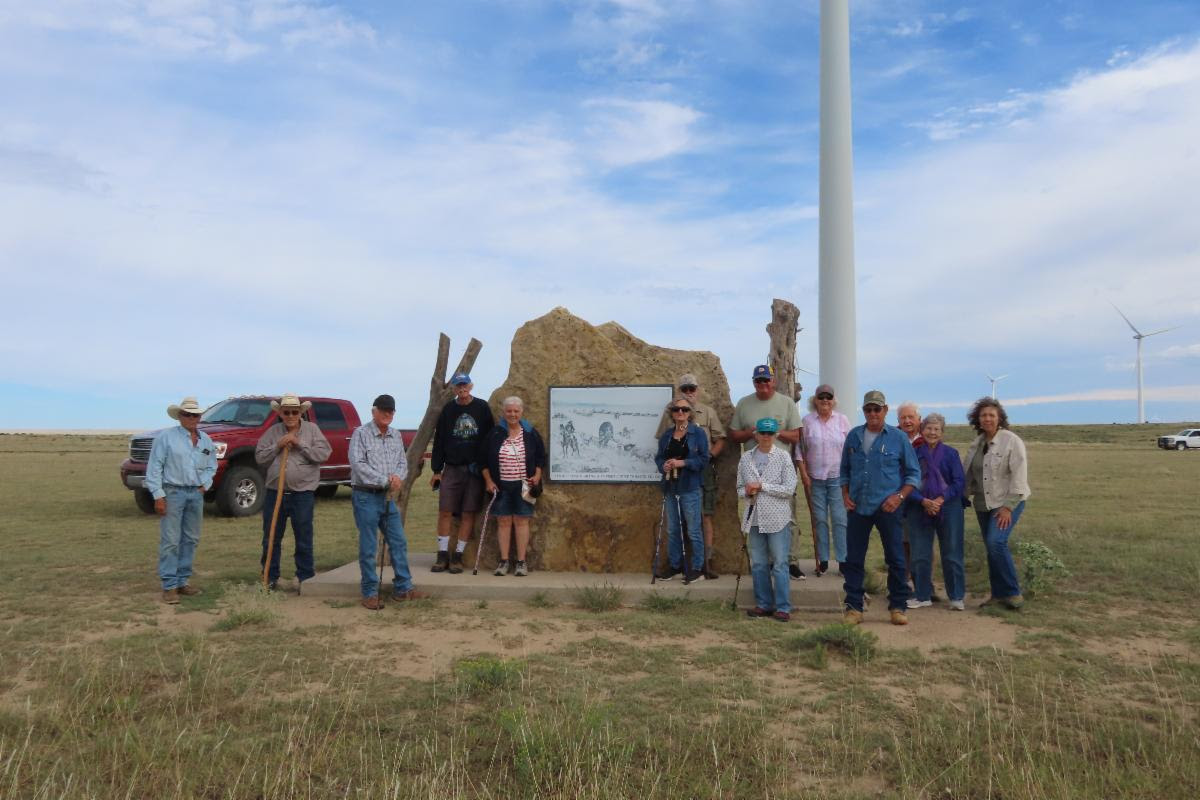
Part of the group at the start of the Emick Ranch Tour
The Santa Fe Trail, a significant 19th-century overland route, served as a vital artery for commerce and military operations, connecting the state of Missouri with the Southwest. This trail played a crucial role in the westward expansion of the United States, facilitating trade and cultural exchange between American and Mexican territories. Within this historical context, the town of Granada, Colorado, emerged as a notable point along the trail, its significance amplified by the arrival of the railroad.
The region where Granada, Colorado, eventually took shape held historical significance even before the town’s formal establishment. Situated in the Big Timbers area of southeastern Colorado, this location served as a natural resting point and an area of considerable activity for travelers along the Santa Fe Trail.
Early in the trail’s history, two trading posts operated in the Big Timbers area, one established by William Bent in 1844 and another by William Tharp in 1846. The site of Old Granada became a favored campground for those traversing the trail, and notable figures such as Fremont in 1844, 1845, and 1853, John Albert in 1845, and John Gunnison in 1854, passed through the area.
This indicates that the geographical location of Granada held inherent value as a resource-rich and strategically positioned area relative to the established trail.
A transformative event for Granada occurred with the westward expansion of the Atchison, Topeka & Santa Fe Railroad. In December 1872, the railroad reached the Colorado border, and by May 1873, it extended its line to Granada for a period of two years, Granada became an “end-of-track town,” a temporary terminus that significantly altered its role in the regional transportation network.
This development directly led to a major shift in the flow of traffic along the Santa Fe Trail. As the railroad reached Granada, most of the trail traffic was redirected to the Granada-Fort Union Wagon Road. The railroad’s arrival effectively created a new logistical link, with Granada serving as the crucial transfer point where goods were moved from rail transport to wagon transport for onward journey towards the Southwest.
This transformation spurred rapid growth in Granada, which became a bustling railroad town with a population of approximately 1,500 residents. The town attracted a diverse population, including railroad employees, gamblers, buffalo hunters, freight handlers, and cowboys working on nearby ranches. One of those ranches was the Hasser/Emick ranch that the Granada Fort Union branch of the Santa Fe Trail crosses.
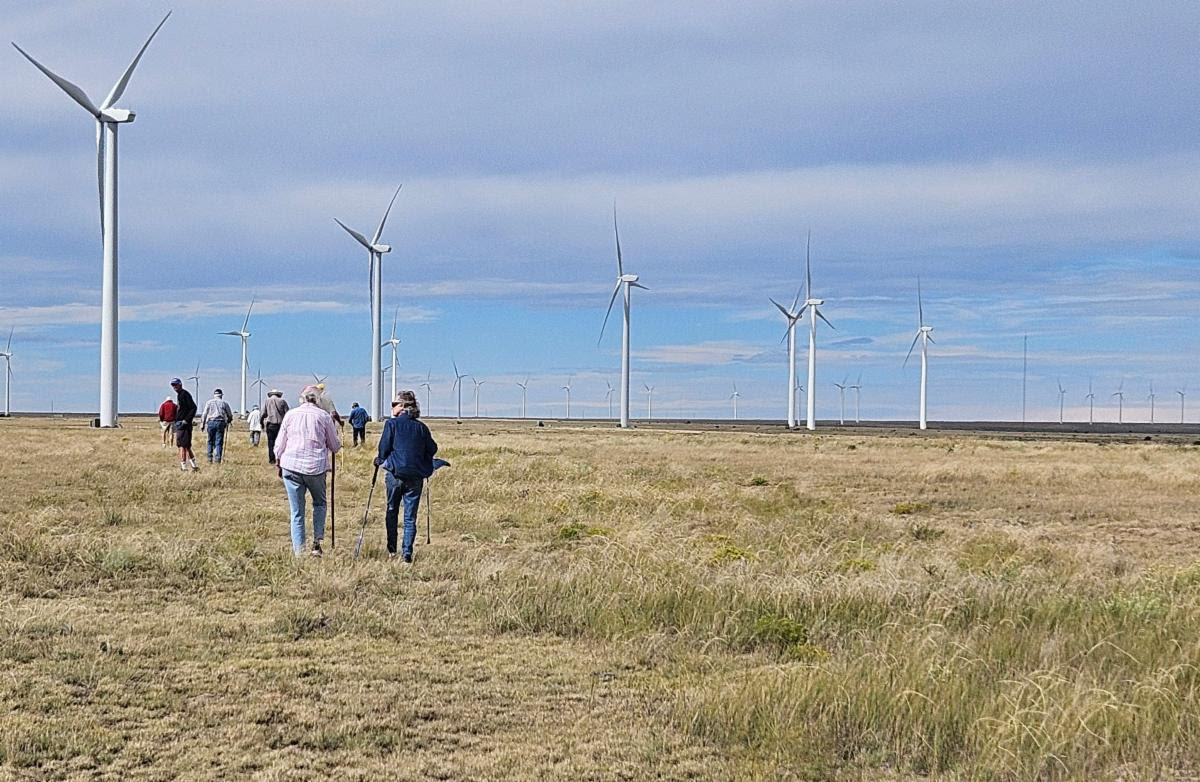
On Saturday September 13, 2025, eighteen members of the Bent’s Fort Chapter along with two guests meet Don Emick at the turnoff from Hwy 385 south of Lamar Colorado, Mr. Emick took the group to a segment of the Granada Fort Union trail that passes through the Emick’s Ranch. Members were given an opportunity to walk the trail for about ½ mile to a marker that marks where the trail crosses the county road.
Then Don led the group to the original ranch homestead established in 1918. Don stated that the fifth-generation is currently carrying on the family tradition.
For more information about the Hasser homestead Centennial Farm go to Windy Ridge Land, LLC | History Colorado.
https://www.historycolorado.org/location/windy-ridge-land-llc
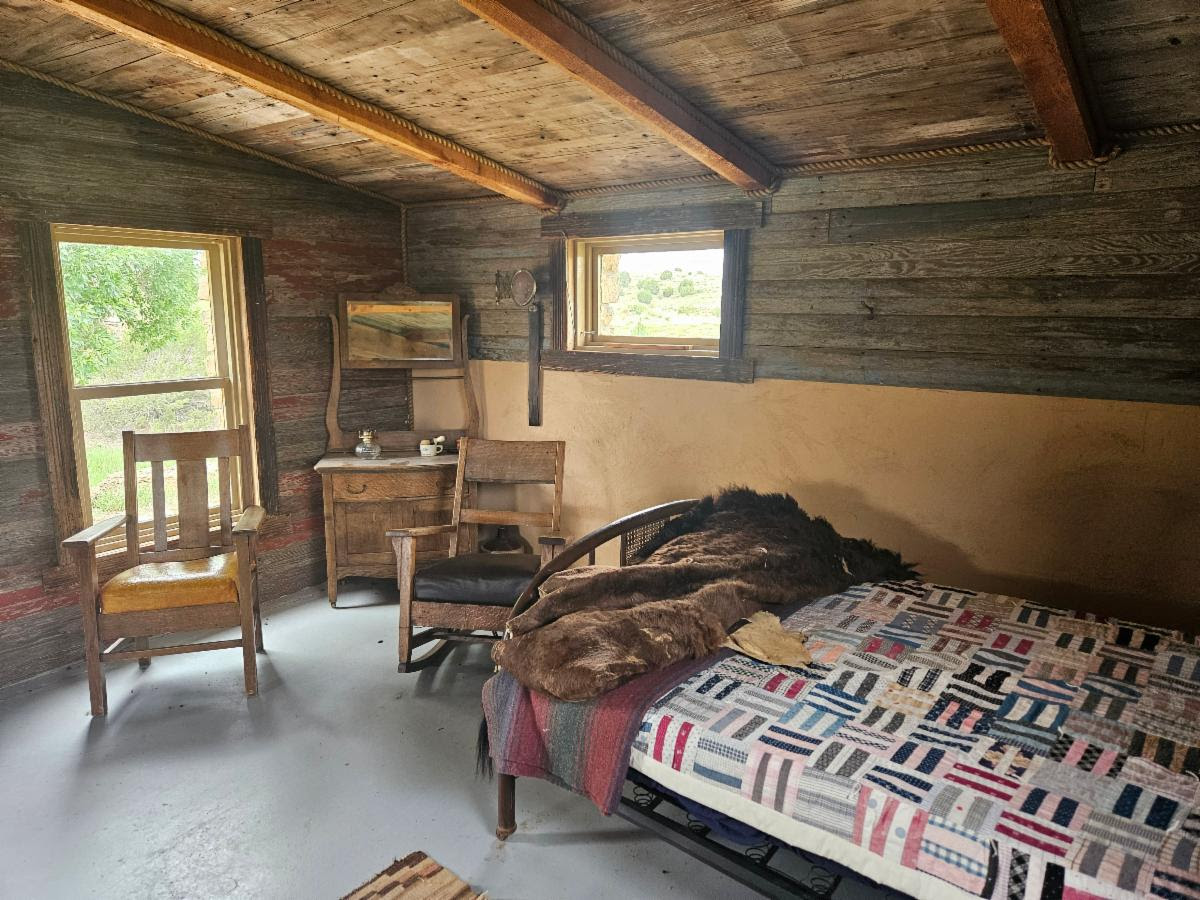
Don shared the history of the area near the homestead. There is a spring that served as a source of water on the trail and was marked with a stone engraved by the army “WELL” that is on display by the big trail marker. The group was treated to stories about the stagecoach station that was also close by.
The group then traveled to the Emicks’ display of approximately fifty historic windmills and learned about the various styles and types of windmills in the collection that was started by Bob Emick in 1981.
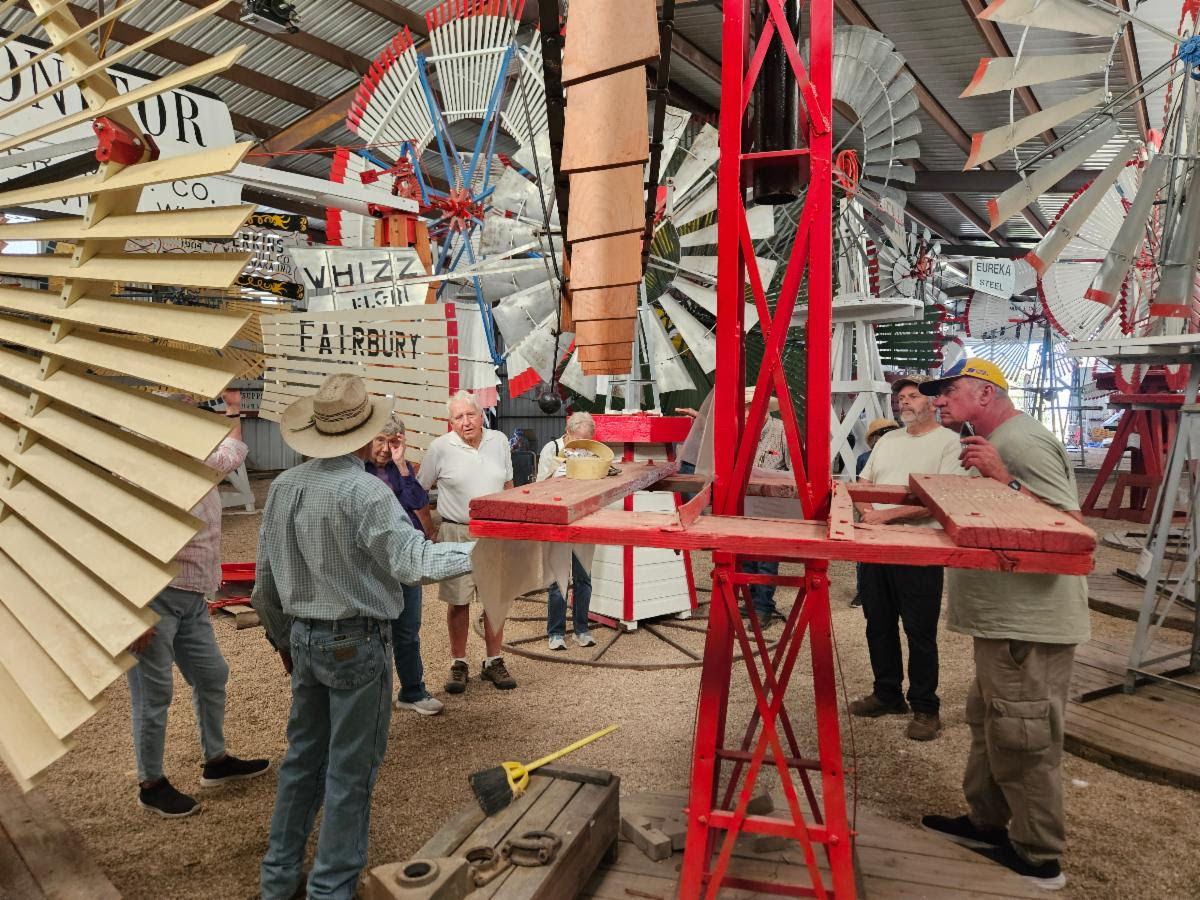
To learn more about the windmills and the Emicks’ efforts to restore them please go to:
https://www.rmpbs.org/blogs/news/windmill-collection-lamar-colorado and
If you can locate a copy of OSCOR HASSER COW PUNCHER “South of the Arkansas” a self-published book by Marvin Hasser Published July 2015,it is well worth reading. It is about the history of cattle ranching in southeast Colorado and gives more insight to the Hasser/Emick history.
The Emicks also have three restored wooden windmills on display in downtown Lamar, including a modest-size Dutch windmill whose parts were picked up during World War II by a local resident. The Emicks welcome tours or individuals that are interested in windmills by contacting Don or David.
The Colorado Green Wind Project operates nearly 100 turbines on the Emicks’ land. When it became operational in January of 2004, the project was the fifth-largest wind farm in the United States.
The group then enjoyed visiting and lunch under the shade of trees at the home of Helen and Bob Emick. The outing ended when a light rain reminded folks it was time to go home. All in all, it was great day of visiting with friends and learning about the history that is right here in Southeast Colorado.
# # #
Photos and article by Kevin Lindahl – published in the October 2025 SFTA E-Blast News
Filed Under: Education • Featured • History • Ranching • State • Tourism
About the Author:
