“We Found the Lost Sand Creek Site” – A local family’s tale of discovery will be topic at upcoming Lamar event
Barbara Crimond | Oct 28, 2026 | Comments 0
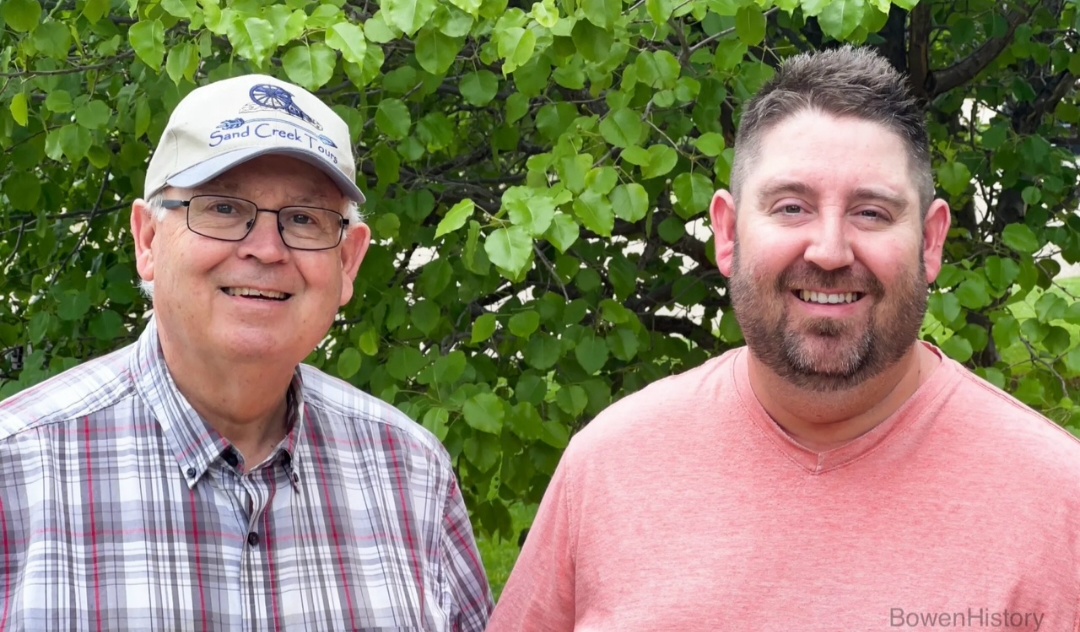
Chuck (left) and Mike Bowen – co-authors of “We Found The Lost Sand Creek Site – Lost by an Historian’s Map, Found By a Soldier’s Clue” (photo courtesy of Bowen family)
Most people living in southeast Colorado have heard of the event known as the “Sand Creek Massacre”. The story that has historically been told is indeed one of a massacre, one in which Colonel John Chivington and roughly 700 U.S. Army and territorial Cavalry troops surprised the Cheyenne Chief Black Kettle’s encampment and slaughtered a large number of Cherokees, mostly women, children, and elderly, on November 29, 1864. The federal government authorized the area as a National Historic site in 2000 and opened it to the public in 2007 as part of the National Park System, erecting a monument to designate the area they said the battle occurred.
A local family has been on a quest since the early 1990s to learn the truth about both the location of the battle as well as what actually happened there. The astounding number of artifacts found on their property tell a completely different story than what many have accepted as fact over the years – a story of a lengthy battle between the Army and the Cheyenne warriors.
I interviewed Mike Bowen, whose father Chuck grew up along Sand Creek. Mike has co-authored a book with his father titled “We Found the Lost Sand Creek” which details their journey from landowners to stewards of a very historic site in their quest for the truth. Chuck and Mike will be discussing their findings and displaying a large number of found artifacts at an event in Lamar on Tuesday, November 10. The event will be held at the Cultural Events Center beginning at 6 pm. It promises to be a very interesting educational evening and I encourage anyone with an interest in history, particularly southeast Colorado history, to attend, as it is a fascinating journey they have been on.
“My mom and dad got involved in 1993 when an independent archaeologist reached out through my grandparents. My dad’s parents and grandparents owned adjoining land which eventually became my grandparents’ land – 7 miles of Sand Creek going through the Bowen Ranch. Dad grew up there. It was his backyard” said Mike. The archaeologist told Chuck and his wife Sheri that after researching it extensively, he felt that the widely-accepted location of the site by the NPS was incorrect. The area originally thought to be the site of the battle is about 1.5 miles from the beginning of the Bowen property line. The archaeologist believed that the battle actually occurred further up the creek and likely on what is now the Bowen Ranch. Ironically, as a child, Chuck stated that he wanted to make a big archaeological discovery someday, fueled by the years he spent exploring the area. “He grew up thinking how cool it must have been when there were soldiers and Indians living out here” Mike said.
After listening to the archaeologist, Chuck immediately started working on a plan to go look for artifacts. “What a monumental project this would be” said Mike. “There’s not a team of people – it’s just him. I’d come home from school and my mom would be reading out loud to Dad from a book filled with eyewitness accounts and Dad would be taking notes as she read and from those notes, he would make a plan. Listening to those accounts, he knew almost exactly where each description was located and would then go search those areas with a metal detector. Even with all those clues, it took a while before he started finding artifacts”. One of the most important artifacts, which will be revealed at the Lamar event was one of the first that Chuck was able to find.
Once Chuck began finding the artifacts, there was a learning curve to be able to identify each one but as he went along, he could quickly identify objects that had belonged to soldiers, civilians and Indians. I asked how he learned to identify them without the aid of the internet, which wasn’t available when he started his search. “A lot of it was networking with people who had experience in that field. One of those people is Butch Kelly, longtime cavalry war era re-enactor/historian. He is very knowledgeable about cavalry equipment” said Mike. To date, the Bowens have found well over 4,000 artifacts, all of which are meticulously documented with photos, descriptions and GPS coordinates as to where they were located.
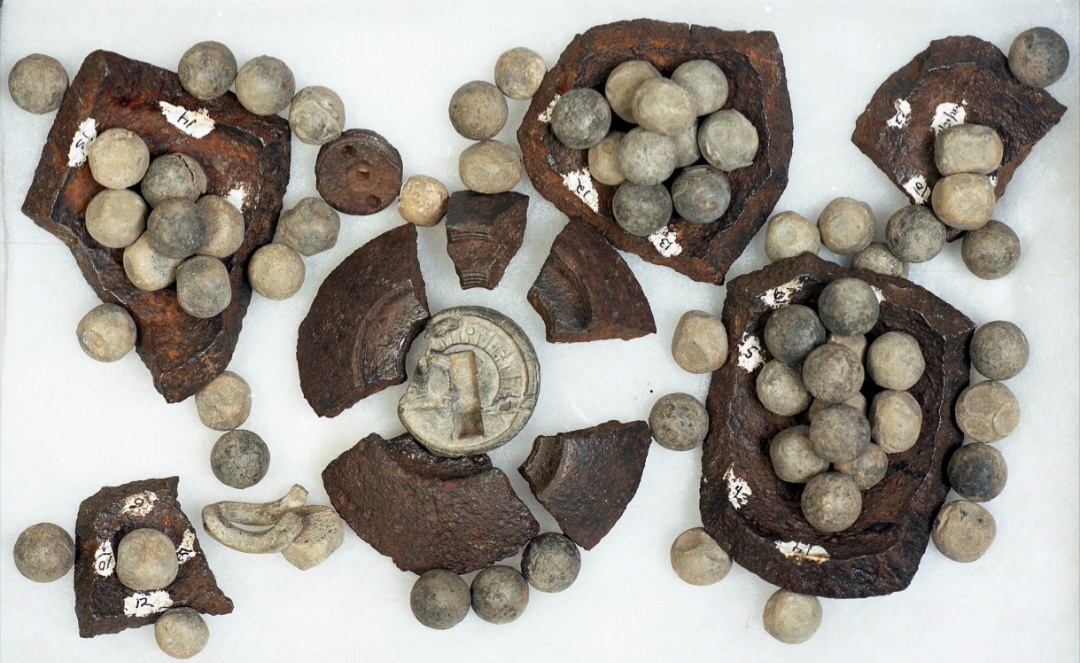
Artifacts found by Chuck Bowen (photo courtesy of Bowen family)
“All we knew going into this was the account of what was thought to be the traditional massacre and we were fully onboard with that going into this. We didn’t have an agenda, or a dog in the fight. None of our ancestors were involved in the battle. You look at that massacre claim – how the soldiers went in and surrounded the village and just basically took them out, mostly women, children, and elderly because the warriors were out hunting. Most of what we’ve learned about Sand Creek is because of the discoveries and all of the research that went into it and learning from eyewitnesses, people that were there”.
There are multiple conflicting accounts of what actually occurred that day, even among Cavalry officers and soldiers. Captain Silas Soule, routinely hailed as a hero for refusing to fight that day, gave conflicting accounts – one from a letter written to a superior officer and another he gave while under oath at the hearings that were held later. One of the discrepancies told in that letter was that both Chief Black Kettle and George Bent were killed in the battle, both of which were untrue. In fact, Black Kettle was only slightly wounded that day and Bent went on to live another 40 years. Another accepted “fact” was that over 250 Indians (a word, Chuck said, that is used in the book because that is how they were referred to historically and not one the Bowens use as a derogatory term) were killed that day with no actual documentation to prove this. More than one eyewitness account stated that only 69 Indian bodies were found following the battle. Soule also testified that the battle lasted 6-8 hours which disputes the massacre story of a swift and merciless killing of innocents.
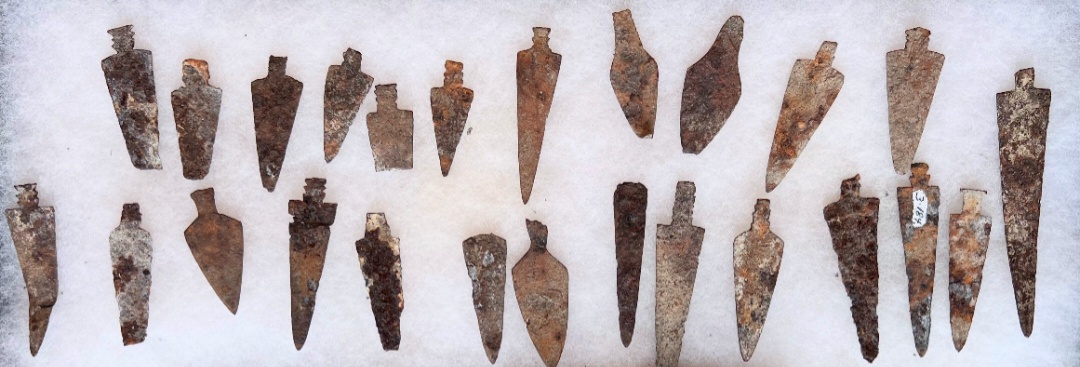
Artifacts found by Chuck Bowen (photo courtesy of Bowen family)
The path of found artifacts backs up the theory that it was an actual battle between the Army and Indian warriors (most of whom were Dog Soldiers – including George Bent who was half Cherokee) that started 2 miles up the Sand Creek from the site designated by the NPS and continued for another 3 or more miles. Of note, per the Bowens, is that absolutely no artifacts have been found at what has been said is the massacre site. There have been multiple eyewitness accounts from both soldiers and Indians also disputing the massacre story, all detailing a lengthy battle between warriors and the Cavalry.
Speaking about his dad’s lifelong interest in archaeology, Mike said “As a kid he wanted to make an archaeological discovery and the whole time, he was riding horses right over the artifacts, most of which were later found to be buried only two to three inches deep. He had no idea at that time”.
The presentation on November 10 will also include a very interesting story involving William Bent, George Bent’s brother – one which significantly altered the events that occurred that day. Mike said that people who come to the program can see lots of artifacts, learn about the discovery and the clarity it brings and the truth it tells about Sand Creek. People attending will be able to purchase the Bowens’ book at the event. For more information about their discoveries, visit their website, https:/www.thelostsandcreek.com. The website includes photos of the artifacts and an extensive blog which takes readers through a fascinating journey through the history surrounding the Sand Creek event. They also have a YouTube channel, @thelostsandcreek with video presentations as well as a Facebook page titled Chuck Bowen – History Investigator.
“The artifacts cannot lie”, said Mike. “They were just simply lying under the surface for over 100 years, waiting for their story to be told”.
By: Barbara Crimond
About the Author: