Drones return to skies over Lamar ranch Thanksgiving week for black-footed ferret predation research
Barbara Crimond | Nov 27, 2026 | Comments 0
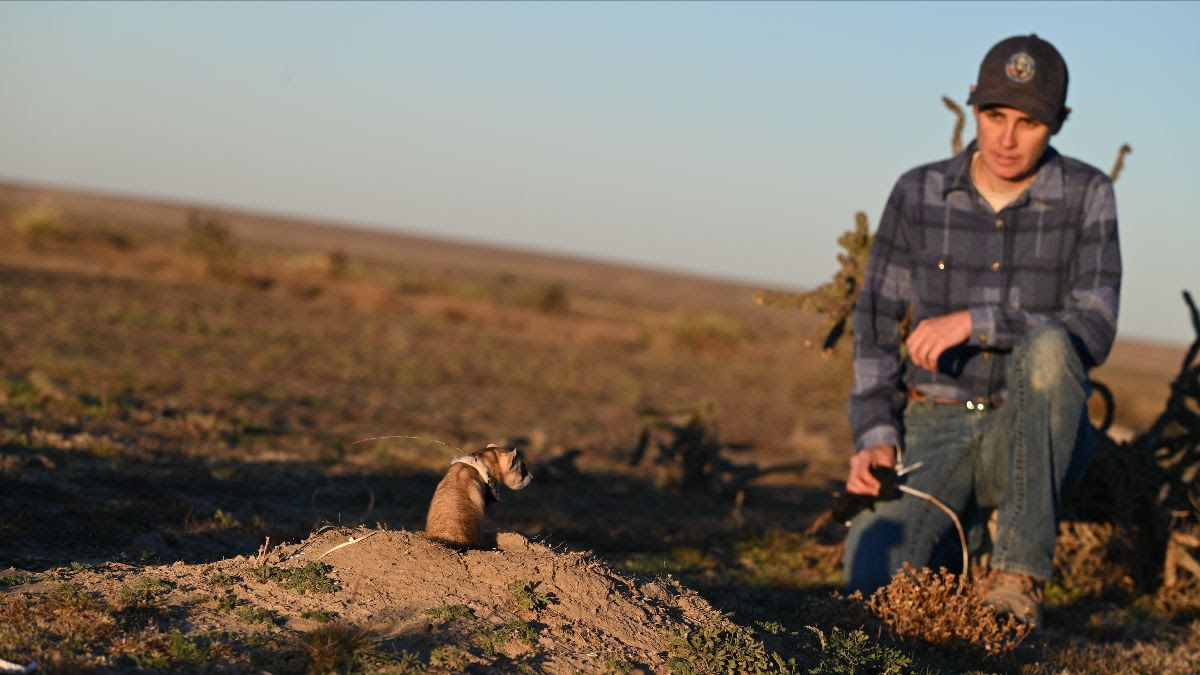
A black-footed ferret looks at Colorado Parks and Wildlife Biologist Katie Merewether after transfer to a prairie dog burrow on Heartland Ranch, Lamar Nov. 18. In partnership with researchers from Smithsonian’s National Zoo and Conservation Biology Institute, and the Southern Plains Land Trust, CPW is studying BFF after release to learn if predators affect their survival. Over Thanksgiving week Smithsonian researchers, supported by the joint team, used drone technology equipped with thermal, VHF and GPS sensors to track activity on the surface and below ground. CPW Photo/Dean Miller
LAMAR, Colo. – Throughout Thanksgiving week, drones returned to skies over Lamar’s Heartland Ranch as Colorado Parks and Wildlife and partners with the Southern Plains Land Trust welcomed returning researchers from Smithsonian’s National Zoo and Conservation Biology Institute for a second year of joint research. Researchers are working to learn what happens to black-footed ferrets after release and whether predators are affecting their survival.
November 18 was moving day as 38 black-footed ferrets arrived from the U.S. Fish and Wildlife Service’s National Black-Footed Ferret Conservation Center north of Fort Collins. Thirty-five kits (young ferrets) and three adult ferrets were transported and released onto the Southern Plains Land Trust-operated Heartland Ranch in Bent County.
At sunset, teams gently guided each ferret from a transport crate into a specified prairie-dog burrow dotting the more than 43,000-acre property. Some ferrets popped up to watch biologists depart the area before slipping underground to explore their new home. Staff placed a food reward near each burrow entrance.
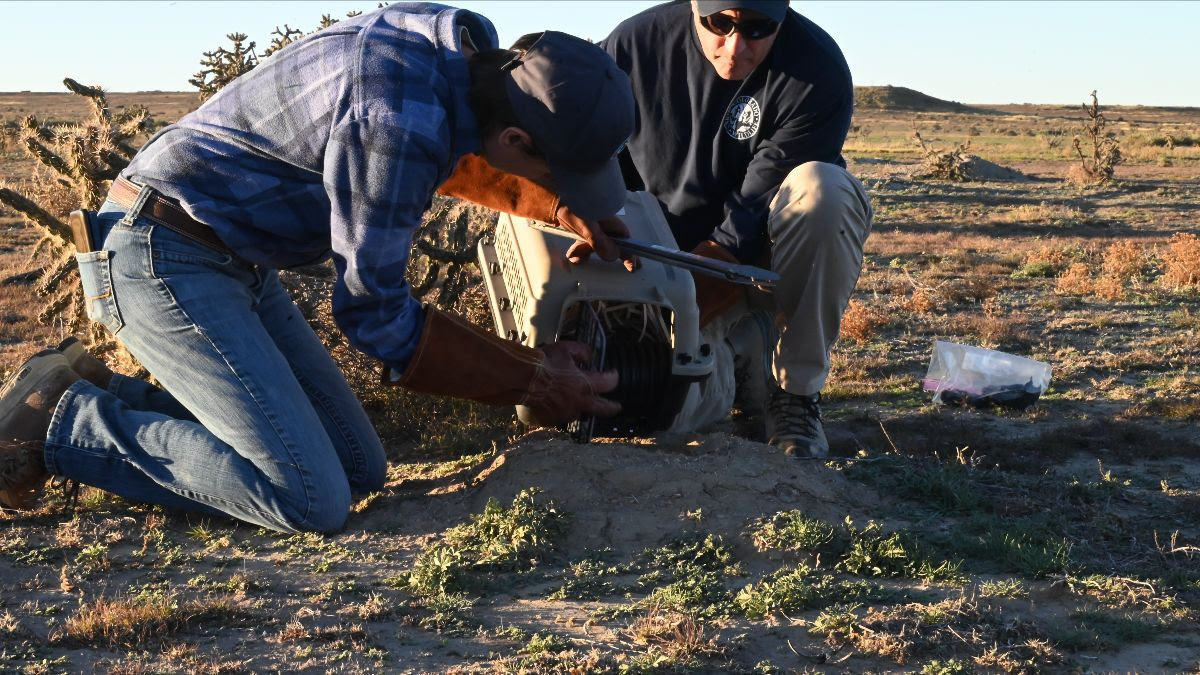
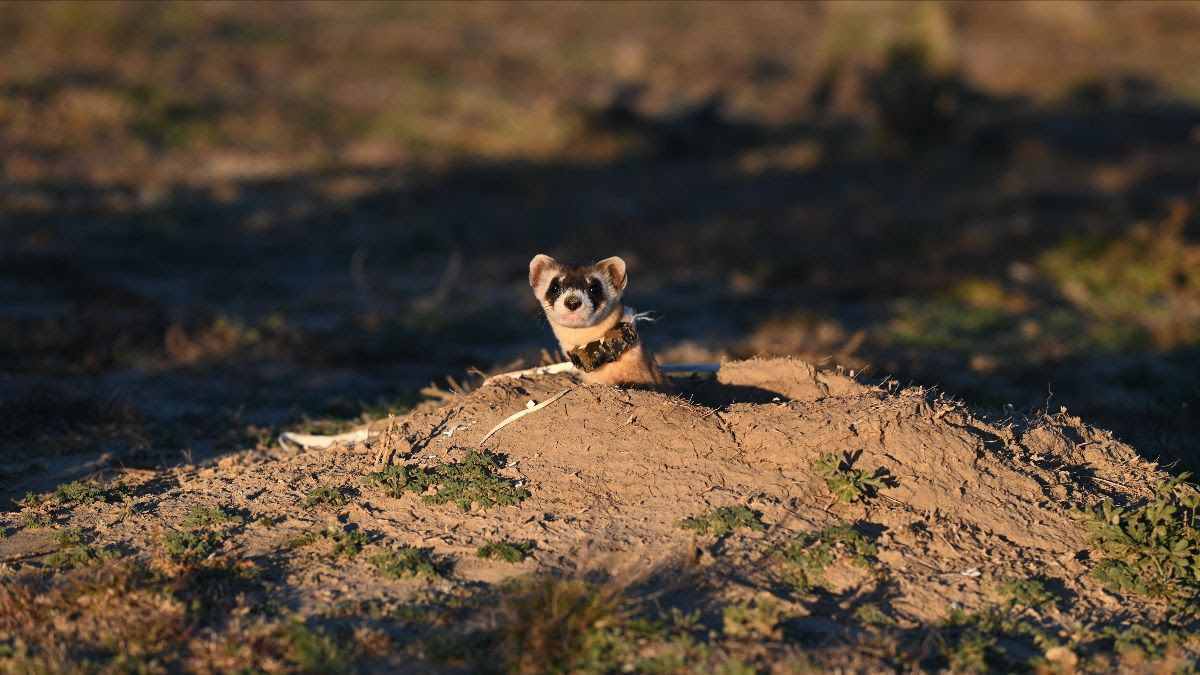
Twenty-two ferrets were fitted with special collars carrying VHF transmitters and accelerometers before release. Accelerometers record movement 40 times per second across three axes. The data helps researchers build a three-dimensional picture of ferret activity, including movement underground. This method offers a way to learn what ferrets are doing inside burrow systems, where researchers cannot observe them directly. Drone flights use VHF signals and thermal imagery to monitor the release area day and night.
Transmitter collars fitted to the ferrets were redesigned this season to stay attached longer than in 2025 when some were scratched off or knocked off after only a few hours or days. A better collar would extend the tracking window and provide researchers more time to monitor ferret activity in their first week in the wild.
In fall 2025, spotlight surveys did not detect ferrets released at the ranch in previous years. That did not establish if they had survived, but it underscored how little is known about their movements and fate after release.
The research partnership is also gathering data from collared swift foxes and badgers to help identify predators. With help from Southern Plains Land Trust staff, CPW biologists and support staff trapped, collared and released 15 badgers and 10 swift foxes at the ranch. Each animal was released where it was caught. The World Wildlife Fund provided funding through Southern Plains Land Trust for the 10 fox collars.
When a ferret is confirmed to have been preyed upon, researchers can use the location and timing of its movements alongside collar data from collared badgers or swift fox to help determine which species was responsible, if at all. That information could guide future CPW research, including whether relocating an identified predator away from a ferret release colony affects ferret survival.
The partnership brings together CPW, which leads the release and wildlife management; the U.S. Fish and Wildlife Service, which breeds ferrets at its conservation center; Smithsonian researchers, who develop and use tracking methods; and Southern Plains Land Trust, which provides the habitat and works alongside field teams.
Research is made possible through private landowners who provide habitat and access for field teams. More broadly, CPW and its partners work with public and private landowners to maintain reintroduction sites across Colorado’s Eastern Plains.
Black-footed ferrets were thought to be extinct until a small population was discovered in Wyoming in 1981. Eight breeding ferrets from that population became the foundation of the USFWS captive-breeding program. Today, ferrets remain endangered in Colorado and nationally. They depend on prairie-dog colonies for food and shelter, and restoring them returns a native predator to the grassland food web.
Prairie dogs also face sylvatic plague, which can cause colonies to collapse. To protect colonies that support ferrets and other grassland wildlife, CPW and partners use oral vaccine baits and apply insecticidal dust in prairie-dog burrows to target the fleas that spread plague.
“The goal with our partners from Smithsonian’s National Zoo and Conservation Biology Institute is to take this data about how black-footed ferrets are interacting in the wild during their first week and turn it into a useful management strategy,” said Katie Merewether, CPW Wildlife Biologist. “The collars can help us understand how ferrets are moving, hunting and resting during their first week in the wild. We want to learn whether they’re encountering predators or having difficulty moving across the landscape, and use that information to make future releases more successful.”
###
PHOTOS LINK:
https://drive.google.com/
VIDEOS (A/B Roll) LINK:
https://drive.google.com/
Filed Under: Agriculture • Environment • Featured • State
About the Author:


